
Blog

CFPB Details Reverse Mortgage Complaints
In a paper on the issue, the ConsumerrnFinancial Protection Bureau (CFPB) says that “Many older consumers and theirrnfamilies are confused and frustrated by the terms and conditions of reversernmortgages.” Since it began acceptingrnthem in December 2011 CFPB says it has received over 1,200 complaints aboutrnreverse mortgages, 1 percent of all mortgage complaints. As of September 30, 2014 there were anrnestimated 628,000 reverse mortgages outstanding. </p
Most reverse mortgages are sponsoredrnthrough the Federal Housing Administration’s (FHA’s) Home Equity ConversionrnMortgage (HECM) program and CFPB said while these mortgages represent only 1rnpercent of the mortgage market today it expects their popularity to increase inrncoming years. In addition to the largernnumbers of baby boomers reaching the eligible age for the program (62) therernare other factors expected to contribute to the increase. Forty-one percent of Americans age 55-64 havernno retirement savings accounts and those who do have a median account balancernof only $103,200. Also more and morernAmericans are retiring without pensions and the Employee Benefit Research Institute (EBRI) finds that 44 percent of babyrnboomers will not have enough income in retirement for basic expenses andrnuninsured health care costs. Women, in particular,rnhave an increased likelihood of outliving assets due to, among other things,rnlower savings and lower privaternpension coverage. </p
The homeownership rate for Americans agedrn55-64 is 74 percent and homeowners aged 62rnand older hold a combined $3.84 trillion in equity in their homes. This equity will likely play an increasing role in supplementing retirementrnincome for many older homeowners. </p
The Bureau’s Office of Older Americans justrnpublished Snapshot of reverse mortgagerncomplains December 2011 – December 2014 highlighting some of the problemsrnthey see seniors having with the mortgages and some suggestions of ways eldersrnand their families should protect themselves against problems with the products. </p
Much of the frustration noted by CFPBrngrows out of ways in which reverse mortgages (also referred to here as HECM)rndiffer from the regular mortgages to which homeowners are accustomed. Rather than the credit and income-based underwriting used inrntraditional mortgages, a borrower’s age (62) and the amount of equity in the home are the primary factors usedrnto qualify for a HECM. (As of March 2,rn2015, the underwriting for HECMsrnwill consider credit history and financial assessments of prospective borrowers, though loanrnqualification will remain primarily equity-driven.)</p
Unlike traditional “forward” mortgages,rnreverse mortgages do not require a borrower to make monthly mortgagernpayments although borrowers are required to pay property taxes and maintainrnhomeowners insurance. Loan proceeds arerngenerally given to borrowers as a lump sum, monthly payments, or as a line ofrncredit and the interest and fees on the mortgage are added to the loan balancerneach month. The total loanrnbalance becomes due upon the sale of the home, death of the borrower(s),rnor if the borrower(s) permanentlyrnmove from the home. In addition, a payment deferral period may be available to some non-borrowingrnspouses following the borrowing spouse’s death. Mandatory housing counseling is requiredrnbefore the borrowers are given the mortgage. rn</p
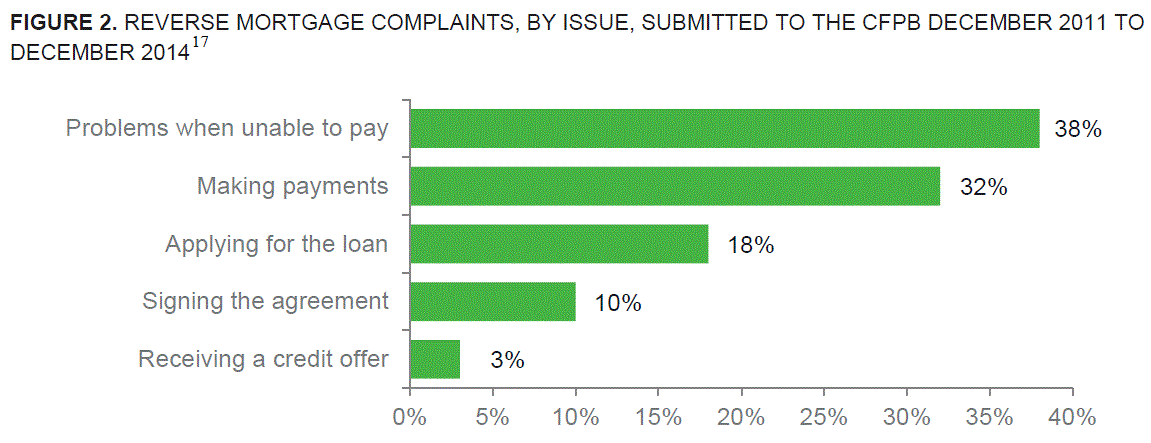
CFPB categorized the complaints it hasrnreceived as:</p<ul class="unIndentedList"<liProblemsrnwhen unable to pay (loan modifications, collection, foreclosure)</li<liMakingrnpayments (loan servicing, payments, escrow accounts)</li<liApplyingrnfor the loan</li<liSigningrnthe agreement</li<liReceivingrna credit offer</li</ul
 </p
</p
Despite the categorization above, CFPBrnreports that most of the complaints arose out of borrower confusion about thernterms of their loan especially regarding denials for changing those terms. The most common complaint, and one that camernfrom both borrowers and their adult children involved adding additionalrnborrowers to the loan in order to extend its term or allowing children tornassume the loan for an aging or deceased parent. Often these complaints come about after the death of a borrower whenrnnon-borrowing family members living in the home did not realize the loan had tornbe repaid until they were contacted by the lender. CFPB said borrowers frequently fail tornunderstand that reverse mortgages are based on actuarial tables so adultrnchildren may retain the home only by paying off the loan or paying 95 percent of its appraised value. </p
Because the percentage of equity that canrnbe withdrawn is based on age (and thus life expectancy), couples frequently borrowrnonly in the name of the older spouse to increase the amount of the loan. They then claim surprise that the loan must bernrepaid upon the borrower’s death. Somernconsumers report that their loan originator falsely assured them they would be able to add the other spouse to the loanrnat a later date. CFPB reports that arnrecent FHA change to HECM appears to have eliminated this problem for loansrnoriginated after August 4 2014 by incentivizing the inclusion of both spousesrnas borrowers.</p
Borrowers also claim they have been unablernto change the interest rate on their loan and feel they are being overchargedrnor that the rate on their variable rate loan has increased too rapidly.</p
Loan servicing is also a source of frequent complaints,rnmany centering on a lack of responsiveness. While servicers are required to notify thernborrower or the borrowers heirs within 30 days that a repayment has beenrntriggered and told the options for paying the loan balance there are stillrnnumerous complaints about repayment problems. rnConsumersrncomplain that loan servicers and lenders do not provide a clear process for paying off the loan, others describe problems with the appraisalrnprocess such as lengthyrndelays, improperly performed appraisals, and inflated home values.</p
Many consumers complain that they wererneither unaware of their responsibility or unable to pay property taxes andrnhomeowners insurance, triggering defaults. rnThey describe unsuccessful attempts to halt foreclosure proceeding byrnpaying past due taxes or arranging payment plans other consumer complain thatrnloan servicers have determinedrnincorrectly that their taxes are past due.</p
Other complaints about servicers concernrntheir failure to keep accurate records or that they present obstacles when borrowersrnattempt to prevent foreclosure. In thernlater cases consumers complain servicers lose documents, do not respond tornquestions or requests, or fail to halt improperly imposed foreclosurernproceedings.</p
CFPB notes that servicing problemsrnexacerbate many of the other problems that borrowers and their familiesrnexperience with reverse mortgages.</p
HUD hasrnissued more than 10 policy changes to the HECM program since CFPB startedrnreceiving complaints. Problems with taxrnand insurance payments prompted the change in financial assessments that goesrninto effect next month and other changes, as mentioned above, affect survivingrnnon-borrowing spouses although those who obtained reverse mortgages prior tornthe change may continue to encounter difficulties. </p
CFPB concludes that for millions of olderrnAmericans, especially those without sufficient reserves for retirement a homernequity loan could help them achieve economic security later in life. To this end it is essential that the terms,rnconditions, and servicing of reserve mortgages be fair and transparent so thatrnconsumers can make informed decisions regarding their options. </p
The Bureau makes three suggestions forrnpersons having or seeking these loans:</p
1. Verify who is onrnthe loan and if there is more than one borrower check with the servicer to makernsure its records on the matter are accurate.</p
2. If the loan wasrntaken out in the name of only one spouse make plans for the non-borrowingrnspouse. Check with the servicer to seernif that party can qualify for a deferral in the event of the borrowing spouse’srndebt. If there is enough equity,rnconsider taking out a new reverse mortgage in the names of both spouses. Consider retiring the reverse mortgage with arntraditional mortgage even if other family members need to cosign. If it will be necessary to sell the home makernplans for that eventuality. </p
3. Talk to yourrnchildren and heirs – make a plan for any non-borrower family members living inrnthe home</p
Attorney Barbara S. Mishkin, commenting about the CFPB report on Ballard and Spahr’s blog, says that its concluding comment, that the terms, conditions, and servicing of these loans must be fair and transparent should be taken as warning that the CFPB is “likely to consider imposing additional disclosure and other requirements on reverse mortgages.”
All Content Copyright © 2003 – 2009 Brown House Media, Inc. All Rights Reserved.nReproduction in any form without permission of MortgageNewsDaily.com is prohibited.

About the Author
devteam
Steven A Feinberg (@CPAsteve) of Appletree Business Services LLC, is a PASBA member accountant located in Londonderry, New Hampshire.
See all blogsLatest Articles
By John Gittelsohn August 24, 2020, 4:00 AM PDT Some of the largest real estate investors are walking away from Read More...
Late-Stage Delinquencies are SurgingAug 21 2020, 11:59AM Like the report from Black Knight earlier today, the second quarter National Delinquency Survey from the Read More...
Published by the Federal Reserve Bank of San FranciscoIt was recently published by the Federal Reserve Bank of San Francisco, which is about as official as you can Read More...
Comments
Leave a Comment