
Blog

2015 Housing Opportunities might be Short-Lived
Therernis certainly no dearth of economic and housing forecasts afoot in the land. Freddie Mac starts out its current U.S.rnEconomic & Housing Market Outlook by comparing this January with last. Back then, we are reminded, “interest ratesrnwere rising, growth was sluggish, and disruptive weather from a polar vortexrnreduced economic growth in the first quarter by about one percent.” </p
Todayrnmortgage rates are down, jobs are up, and failing oil prices are providing arnbig boost to individuals and the economy. The question Frank E. Nothaft and LeonardrnKiefer, Freddie Mac’s chief and deputy chief economist ask is “whether or notrnhouseholds and businesses will be able to seize these opportunities and makernthe most of them.” The two point outrnthat many of these opportunities may be, as television pitchmen say, availablernfor a limited time only.rn</p
Nothaft’srnand Kiefer’s recap of where rates have traveled over the last year or so arernfamiliar to MND readers as is their summary of the strong job growth andrneconomic resurgence that came about after the nation recovered from that awfulrnfirst quarter of 2014. So where do therneconomists think we are going and how should people and business be ready forrnthe ride?</p
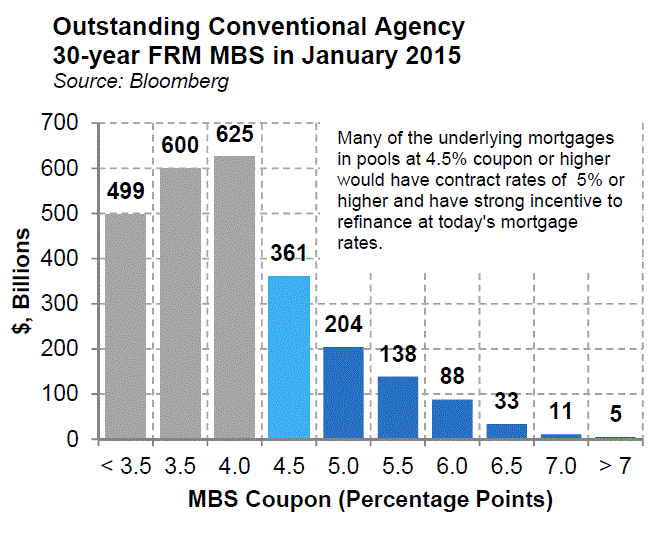
Lookingrnat future mortgage lending activity, Freddie says there are $361 billion inrn30-year fixed-rate agency mortgage-backed securities outstanding with a 4.5rnpercent coupon and another $479 billion with a coupon greater than 4.5rnpercent. Many of the mortgages underlyingrnthose MBS have an interest rate of 5 percent or higher and so borrowers have arnstrong incentive to refinance at today’s rates. rnFreddie Mac also expects the current low rates to boost the purchasernmarket so that it reaches the highest levels since 2007. </p
 </p
</p
Evenrnas the job market improved many potential homebuyers have been unable tornpurchase a home because high rents are preventing them from saving enough for arndown payment. The economists see the newrnmortgage programs announced by Freddie Mac and Fannie Mae which will allow asrnlittle as 3 percent down for purchase or refinancing as well as the roll-backrnin FHA annual premiums which begins this month to be positive changes, makingrnhome buying more feasible, especially as labor markets continue to improve andrnmore Millennials begin to form households. </p
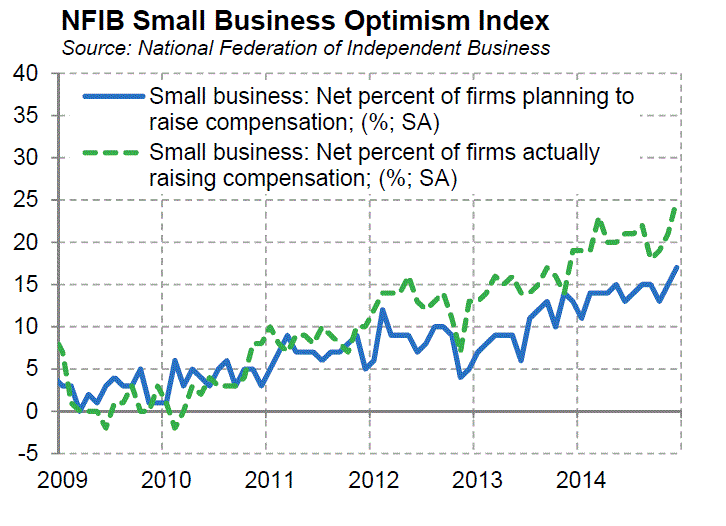
AndrnNothaft and Kiefer do expect that labor market to improve and more importantlyrnfor wages to do so as well. Wage growthrnactually declined by 5 cents per hour in December and the 1.7 percent increasernin average hourly earnings over the course of the year barely kept up withrninflation. But both the Conference BoardrnConsumer Confidence Index and the National Federation of Independent BusinessrnIndex reached respective six and eight year highs in December, indicating thatrnconsumers are more optimistic about economic conditions and small businessesrnexpect to increase employee compensation this year. </p
 </p
</p
ThernOutlook calls gas prices the big surprise of the year. Energy savings, it says, are serving tornsomewhat offset the lack of wage growth in consumers’ pockets. But falling gas prices, they remind us,rncould also have a downside for housing markets, some of which, like cities inrnNorth and South Dakota and some parts of Texas, had strong growth even duringrnthe housing crisis arising almost solely from energy industry activity. </p
Asrnfor that “limited time only” warning, Nothaft and Kiefer see several suchrnopportunities in the domestic housing market. rnOne, the downward pressure on interest rates, inflation, and gas pricesrnbecause of weakness elsewhere in the world and a flight to safety in U.S.rnTreasuries. Over time, they predict, thernglobal economy should stabilize and many of these trends will reversernthemselves. In addition, domestic economicrnpolicy may affect rates. They expect thernrelatively low rates we are seeing now to last through the first half of thernyear and then begin to move higher. </p
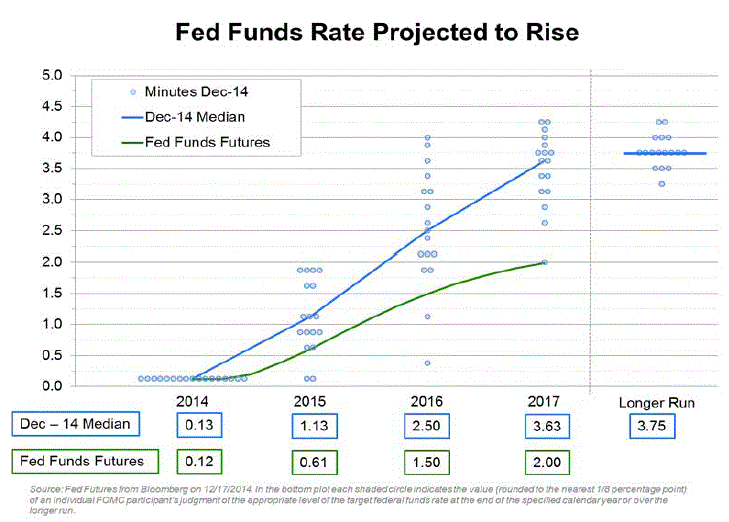
Onernkey consideration is the timing for a change in Federal Reserve Policy on shortrnterm interest rates. When they do startrnto raise them, and some think it will be this year, they may do sornrepeatedly. Freddie Mac is forecastingrnthat the 1-year constant maturity treasury yield will be up nearly one point byrnyear end with most of that increase dating from the first Fed move.</p
 </p
</p
Still,rnFreddie Mac doesn’t expect to see mortgage rates spike dramatically. “There is always the potential for largernshort-term movements in bond markets, like with the Taper Talk of June 2013,rnbut the longer term trend should be for only a gradual increase in rates.” The company’s economists believes there isrnstill a lot of room before rising rates do any harm to growth or housingrnmarkets. </p
Whilernright now the effects of the global slowdown on the U.S. appear positive, i.e.rnlower interest rates and gas prices, if it persists the result could be decliningrnexports and lower growth at home. Thernconsensus forecast is for growth to pick up in most of the world but for Europernto lag behind. </p
Nothaftrnand Kiefer conclude that the economy has a great opportunity to expand in 2015rnwith the delayed increase in interest rates and dropping oil prices helping tornspur growth. “Until rates start to rise laterrnin the year, housing markets should respond positively and we anticipaternincreases in home sales and continued improvement in construction activity.rnWith rates lower at the beginning of the year, we’ll see higher than expectedrnrefinance volume, but expect refinance volume to drop quickly as rates rise.”
All Content Copyright © 2003 – 2009 Brown House Media, Inc. All Rights Reserved.nReproduction in any form without permission of MortgageNewsDaily.com is prohibited.

About the Author
devteam
Steven A Feinberg (@CPAsteve) of Appletree Business Services LLC, is a PASBA member accountant located in Londonderry, New Hampshire.
See all blogsLatest Articles
By John Gittelsohn August 24, 2020, 4:00 AM PDT Some of the largest real estate investors are walking away from Read More...
Late-Stage Delinquencies are SurgingAug 21 2020, 11:59AM Like the report from Black Knight earlier today, the second quarter National Delinquency Survey from the Read More...
Published by the Federal Reserve Bank of San FranciscoIt was recently published by the Federal Reserve Bank of San Francisco, which is about as official as you can Read More...
Comments
Leave a Comment