
Blog

Freddie Mac Economists Prescribe L.I.F.T. for Economy
FrankrnE. Nothaft and Leonard Kiefer, Freddie Mac’s chief and deputy chief economistsrnhave come up with a formula for lifting the economy from its continuingrnlow-growth status to a trajectory of robust sustainable growth. And that’s what they are calling it,rnL.I.F.T. The acronym stands for Labor,rnIncome, Fixed Investment, and Trust and in the current edition of the company’srnU.S. Economic and Housing Market Outlook</ithey lay out the parameters for each. </p
Labor</p
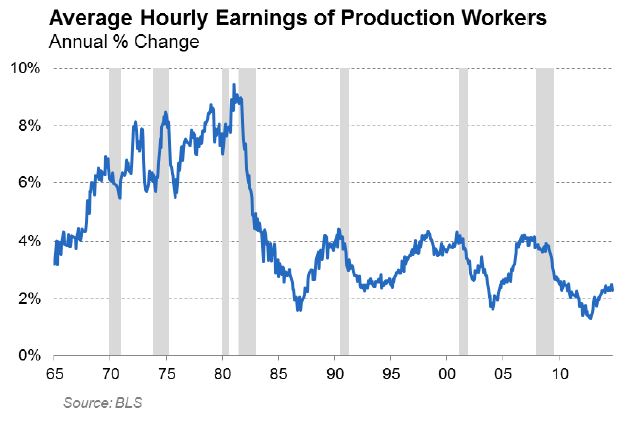
Thernlabor market must fully recover, providing solid employment gains, less longrnterm unemployment, and broad-based income growth. Unless the labor marketrnrecovery accelerates, any improvement in the housing market will also lag. Last month the unemployment rate finally fellrnbelow 6 percent for the first time since the recovery began but that numberrndoes not tell the full story. </p
Therernmust be three other factors in addition to lower unemployment. Labor force participation among younger agerngroups must improve, especially for those 25 to 54 years of age. Second, long-term unemployment must returnrnnearer to historical norms and finally, there must be sustained wage increases.</p
The economists seernonly modest further improvements in the headline unemployment rate; an averagernof 5.7 percent in 2015, only .2 percent below the current level, because thernimproving labor market will bring many dropouts in the 25-54 age cohorts backrninto the job hunt. </p
Income Growth</p
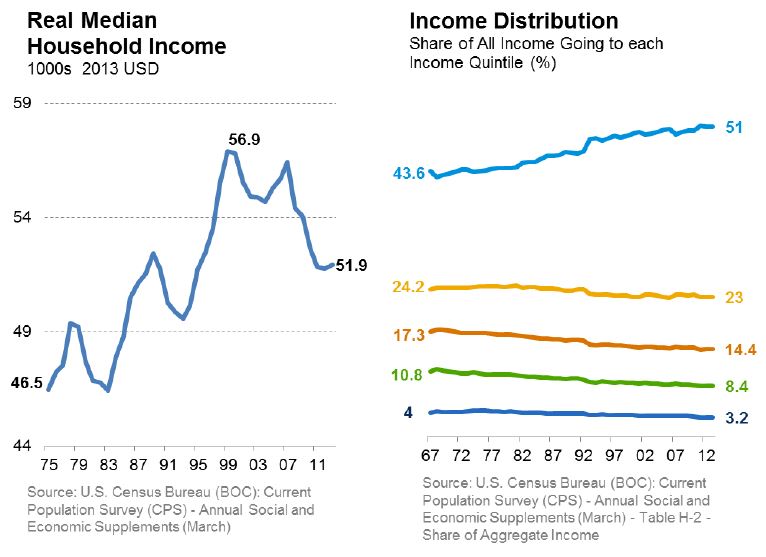
Income growth hasrnbeen, in Nothaft’s and Kiefer’s words, “tepid at best” throughout thernrecovery. Per capita income has improvedrnover the last five years but the gains have not been broad-based. From 1999 to 2013 real inflation-adjusted medianrnhousehold income has fallen from $56,900 to $51,900. The economy will not function at its best untilrnincomes rise across the board. A faster growth in GDP is essential tornaccomplish this. </p
 </p
</p
 </p
</p
GDP growth hasrnstarted to accelerate and the economists expect a robust third quarter reportrnwith over 3 percent annualized growth. For this to continue there must bernnormalized fixed investment, particularly in the residential sector.</p
Fixed Investment</p
Fixed investment in residential andrnnon-residential buildings, computers, and other equipment has been slow tornrecover. At the end of the recession investment picked up, but as a share of total GDP is still about 2 percentage points below thernlevels reached prior tornthe Great Recession. </p
Residentialrnspending is particularly depressed. rnPrior to the recession this type of investment, especially constructionrnof residential units, averaged about 5 percent of GDP but since June 2009 hasrnbeen around 3 percent. There have beenrnabout 1.0 million housing starts in the past 12 months while the nation needsrnto add perhaps as many as 1.7 million housing units per year to keep up withrndemand.</p
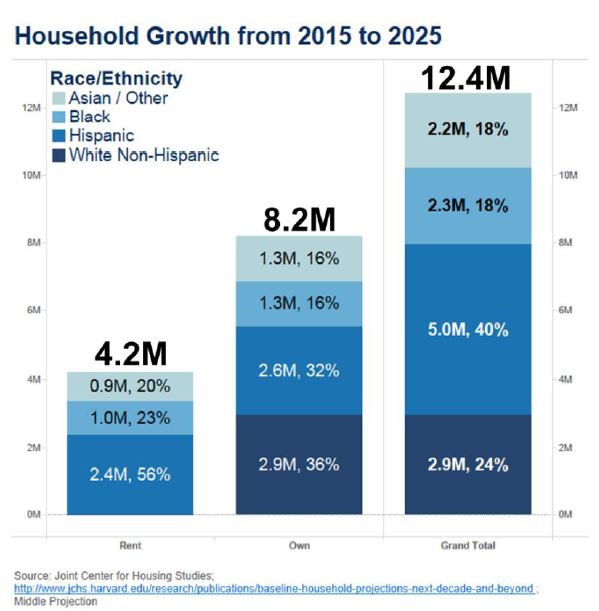
Household growthrnover the next ten years is projected at 12.4 million, 8.2 million of which arernexpected to be homeowners and there is not enough vacant housing stock tornabsorb them. The gap between today’s residential investment and potentialrnlong-term demand demonstrates that an increase in investment could addrnsignificantly to GDP growth.</p
 </p
</p
Trust andrnConfidence Restored</p
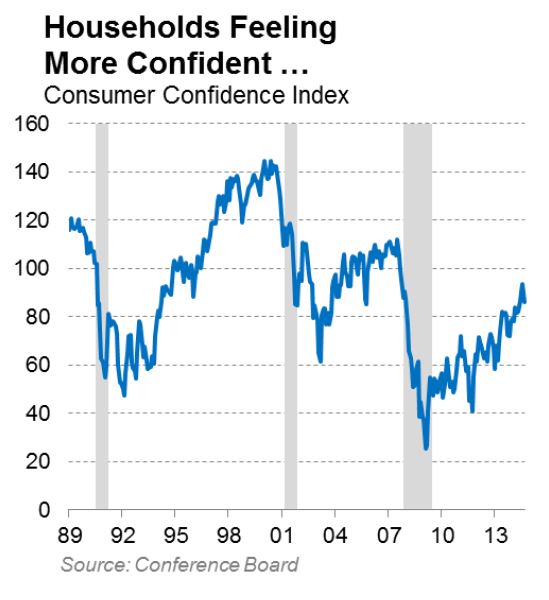
Confidence andrntrust in the economy are fragile today but they are needed to propel economicrngrowth. Following the recessionrnconfidence was at historic lows and uncertainty about the future was high. Ongoingrndebates over fiscal and monetary policy, regulations, and concern aboutrnlawsuits have increased uncertainty. Butrnheadlines about these issues have ebbed, and economic policy uncertainty isrnnear the lowest level since the end of the recession. Still there arernmany actual and potential crises both home and abroad that call for a wary eye onrnthe economy to see if confidence falters.</p
 </p
</p
Freddie Mac’srneconomists say they remain optimistic for growth at home even if the rest ofrnthe world slows down and an improving labor market, robust GDP growth,rnresilient consumers, and a decline in the price of oil should help the economyrnin the short run. A strong pent-uprndemand for housing and low interest rates should do the same for the housingrnsector in the long-run.
All Content Copyright © 2003 – 2009 Brown House Media, Inc. All Rights Reserved.nReproduction in any form without permission of MortgageNewsDaily.com is prohibited.

About the Author
devteam
Steven A Feinberg (@CPAsteve) of Appletree Business Services LLC, is a PASBA member accountant located in Londonderry, New Hampshire.
See all blogsLatest Articles
By John Gittelsohn August 24, 2020, 4:00 AM PDT Some of the largest real estate investors are walking away from Read More...
Late-Stage Delinquencies are SurgingAug 21 2020, 11:59AM Like the report from Black Knight earlier today, the second quarter National Delinquency Survey from the Read More...
Published by the Federal Reserve Bank of San FranciscoIt was recently published by the Federal Reserve Bank of San Francisco, which is about as official as you can Read More...
Comments
Leave a Comment