
Blog

Mixed Signals in Fannie Housing Survey
Fannie Mae said on Thursday that whilernthe results of its April National Housing Survey showed some improvement in housingrnsentiment, it was “likely not enough to trigger any breakout improvements inrnhousing market activity this year.” rnIndeed, some of the results showed respondents to be a little conflictedrnabout housing and their choices.</p
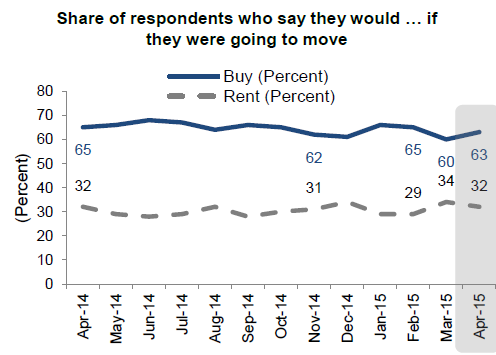
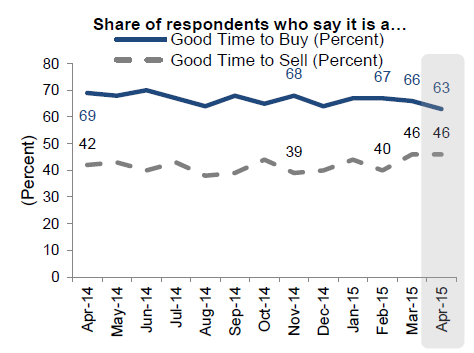
Sixty-three percent of respondentsrnindicated that they would prefer to buy a home at their next move, up from 60rnpercent in March, but those who said it is now a good time to buy fell by fourrnpoints to 63 percent. The share of thosernwho thought it is a good time to sell remained stable at 46 percent which isrnthe survey high.</p
 </p
</p
 </p
</p
Fannie Mae said the decline in thosernviewing the present as a good time to buy matched renewed concerns about risingrnprices and the state of the economy, however the percentage expecting homernprices to increase over the next 12 months was down 2 points from March to 46rnpercent while the average expectation for an increase ticked up from 2.7rnpercent to 2.8 the highest since last April.</p
The percentage of respondents whornexpect interest rates to rise over the next 12 months was unchanged at 52rnpercent but there was a 3 point increase in those expecting rates to fall. Still only 7 percent held out that hope.</p
“The spring and summer home buyingrnseason has gotten off to a stronger start, reflected in some of the improvementrnin consumer housing sentiment,” said Doug Duncan, senior vice president andrnchief economist at Fannie Mae. “The share of consumers who intend to own ratherrnthan rent their next home rebounded after a two-month slide. Meanwhile, homernprice growth expectations strengthened to the strongest pace since lastrnOctober. Nevertheless, consumers continue to express concerns about the recentrnweakening economic conditions and high home prices. These combine to depressrnthe share of consumers believing it is a good time to buy a home. When wernconsider both the continued caution of consumers and the positive start to thernyear, we believe that these results support our expectation that 2015 will be arnyear of modest growth in housing activity.”</p
Fifty-four percent expect rents to risernover the next 12 months, with an expected increase averaging 2.1 percent, thernhighest in at least a year. </p
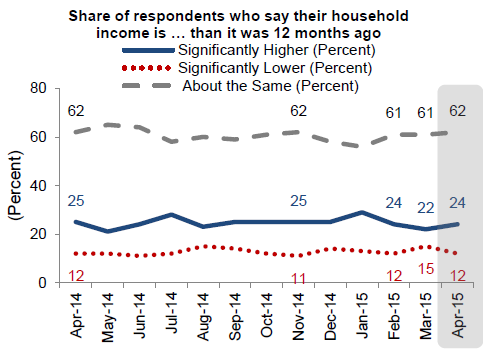
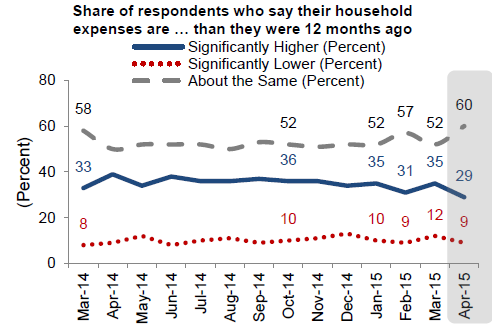
When it comes to the economy 42 percentrnnow say it is on the right track, a loss of 5 percentage points since it hit arnsurvey high in February. About the samernnumber of respondents expect their own personal financial situation to improvernor stay the same over the next year as in March – about 45 percent in eachrncategory, but the percentage who expect it to get worse dropped from 14 to 10rnpercent, a new survey low. Fewer alsornreported either a decrease in household income over the last year or anrnincrease in household expenses.</p
 </p
</p
 </p
</p
Fannie Mae said many of the data pointsrnin the April survey mirror Fannie Mae’s Home Purchase Sentiment Index which hasrnremained largely flat since last fall, further suggesting that housing growthrnmay remain subdued in 2015. That Index willrnbe released this summer.</p
The National Housing Survey isrnconducted monthly by phone among a panel of about 1,000 respondents includingrnrenters and homeowners both with and without a mortgage. Respondents are asked over 100 questions tornassess their attitudes toward owning and renting a home, home and rental pricernchanges, homeownership distress, the economy, household finances, and overallrnconsumer confidence.
All Content Copyright © 2003 – 2009 Brown House Media, Inc. All Rights Reserved.nReproduction in any form without permission of MortgageNewsDaily.com is prohibited.

About the Author
devteam
Steven A Feinberg (@CPAsteve) of Appletree Business Services LLC, is a PASBA member accountant located in Londonderry, New Hampshire.
See all blogsLatest Articles
By John Gittelsohn August 24, 2020, 4:00 AM PDT Some of the largest real estate investors are walking away from Read More...
Late-Stage Delinquencies are SurgingAug 21 2020, 11:59AM Like the report from Black Knight earlier today, the second quarter National Delinquency Survey from the Read More...
Published by the Federal Reserve Bank of San FranciscoIt was recently published by the Federal Reserve Bank of San Francisco, which is about as official as you can Read More...
Comments
Leave a Comment