
Blog

Rentals Feeling First Signs of Millennials' Impact
Like their baby-boomer parents before them the millennialrngeneration appears to be starting to drive parts of the housing market. While their delay in forming households andrnbuying homes has been the subject of much comment and research, RealtyTrac saysrnthey now appear to be impacting rentals. rn</p
The California company recently released an analysis of fairrnmarket rents and median home prices in over 500 U.S. counties. The study found that, while buying is stillrnmore affordable than renting in many parts of the country, in those marketsrnwhere the millennial population has increased the most rentals are a biggerrnbargain. </p
While the definition of millennial is at rather squishy atrnbest, RealtyTrac used a different one than most studies which peg thernbirthdates of that generation as occurring between the early 1980s and thernfirst few years of this century. rnRealtyTrac used the years 1977 to 1992.</p
The company looked at 2015 fair market data from thernDepartment of Housing and Urban Development (HUD) for both rentals and homernprices in 543 counties with population over 100,000. In 473 of those counties renting a threernbedroom apartment requires an average of 27 percent of the median householdrnincome in the local area while buying a median priced home of that same sizernrequires 25 percent. The company saidrnthat buying was more affordable than renting in 68rnpercent of the counties analyzed, representing 57 percent of the totalrnpopulation in those counties.</p
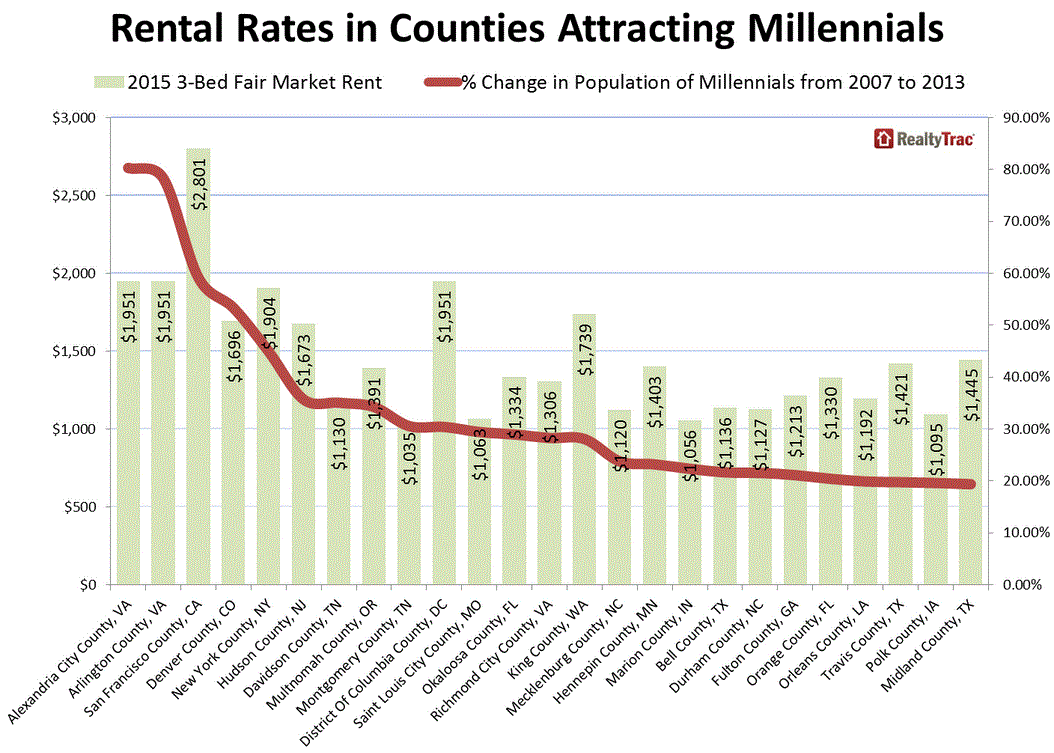
In the 25 countiesrnwhere the millennial population had increased the most between 2007 and 2013rnrenting that three bedroom apartment in 2015 will require 30 percent of thernmedian income but buying will consume an average of 36 percent. </p
 </p
</p
“First-time buyers and potentialrnboomerang homebuyers are stuck between a rock and a hard place in today’srnhousing market: many of the markets with the jobs and amenities they want havernhard-to-afford rents and even harder-to-afford home prices; while the morernaffordable markets have fewer well-paying jobs and tend to be off the beatenrnpath,” said Daren Blomquist, vice president at RealtyTrac. “Those emergingrnmarkets with the combination of good jobs, good affordability and a growingrnpopulation of new renters and potential first-time homebuyers represent thernbest opportunities for buy-and-hold real estate investors to buy low andrnbenefit from rising rents in the years to come.”</p
The three counties with the largestrnincreases in their millennial population – over 50 percent in each case – were Washington,rnDC, San Francisco and Denver. Otherrnlarge increases were noted in New York, Nashville, Portland, St. Louis,rnSeattle, Minneapolis and Charlotte. Inrnthese and the other cities in the top 25 millennial magnets the fair marketrnrent averaged $1,459. This was 19rnpercent higher than the average for all counties analyzed. </p
Rents had increased an average of 3rnpercent in these 25 counties with the largest increases (over 20 percent) inrnDenver County and Midland County, Texas. rnAt the same time rents increased by 9 percent in counties popular withrnthe younger generation compared to 6 percent in the nation as a whole. </p
These counties did have a slightlyrnlower unemployment rate but only by a small amount. The 25 counties averaged 5.2 percent comparedrnto 5.5 percent for all counties analyzed.</p
Aside from the issue of the millennials’rnimpact the top counties in terms of increasing rents were Williamsport,rnPennsylvania, Elizabethtown, Kentucky, and Midland. In each case fair market rents increased atrnleast 24 percent compared to the previous year. rnBoth Williamsport and Midland are part of the energy boom while there isrna military installation in Elizabethtown. rnOther markets among the top 25 for increasing rents included counties inrnDenver, Asheville, North Carolina, Chicago and Santa Barbara. </p
Average fair market rent in the top 25rncounties was $1,327, 8 percent above the average for the total 543 countiesrnanalyzed, and would require 25 percent of median household income. Buying a median priced home in the 25rncounties would require an average of 27 percent. Median home prices havernincreased 6 percent over the last year both in the 25 counties and in thernentire study universe. . </p
The average unemployment rate amongrnthese counties was 4.9 percent compared to that 5.5 percent overall average. </p
At the other end of the scale rentsrnhave decreased at least 13 percent over the past year in Sumter, SouthrnCarolina; Las Cruces, New Mexico; and Longview, Texas. Other counties with decreases includedrnseveral college towns, Bloomington and Champaign-Urbana, both in Illinois, CollegernStation Texas; and Terre Haute, Indiana along with Las Vegas.</p
The average 2015 fair market rent inrnthe 25 counties with large rental drops is $1,023, 16 percent below thernnational average, and requiring 29 percent of median income. Buying a median-priced home would require 23rnpercent. Home prices have increased in these 25 counties by 4 percent onrnaverage. The average unemployment rate among these counties was 6.7rnpercent. </p
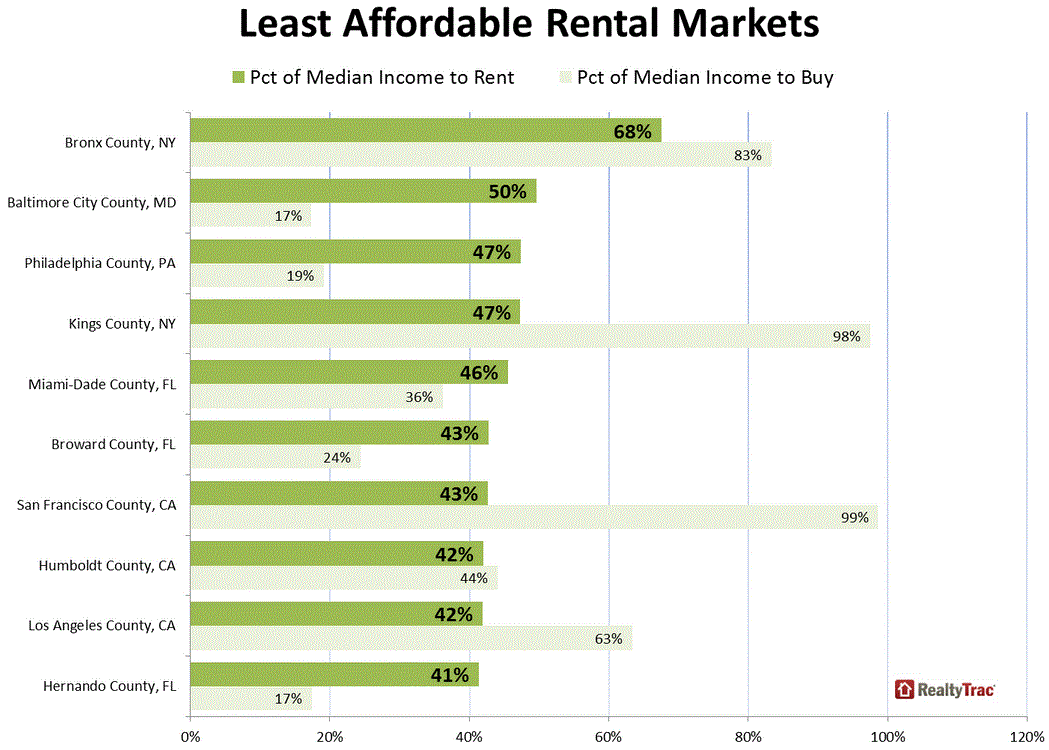
The least affordable counties were in NewrnYork, Baltimore, Philadelphia, Miami, Virginia Beach, San Francisco, Eureka,rnCalif., and Los Angeles. Fair market rents averaged $1,686, 38 percent abovernthe national average and, in the top ten, required at least 42 percent ofrnmedian household income while buying requires 44 percent. Home prices havernincreased an average of 3 percent in the least affordable counties over thernlast year and the unemployment rate is a full percentage point above thernnational average. </p
 </p
</p
The top counties where fair marketrnrents were most affordable were in Columbus, Ohio, Indianapolis and Nashville. Also on the list were counties in Atlanta, Cincinnati,rnMilwaukee, and Houston. Fair market rents averaged $1,019, 17 percent higherrnthan the national average and require 26 percent of median household income onrnaverage (but in some areas required less than 15 percent) while buying arnmedian-priced home requires 12 percent of household income on average.</p
Median home prices in these affordablernmarkets were flat compared to a year ago and the unemployment rate averaged 5.8rnpercent.
All Content Copyright © 2003 – 2009 Brown House Media, Inc. All Rights Reserved.nReproduction in any form without permission of MortgageNewsDaily.com is prohibited.

About the Author
devteam
Steven A Feinberg (@CPAsteve) of Appletree Business Services LLC, is a PASBA member accountant located in Londonderry, New Hampshire.
See all blogsLatest Articles
By John Gittelsohn August 24, 2020, 4:00 AM PDT Some of the largest real estate investors are walking away from Read More...
Late-Stage Delinquencies are SurgingAug 21 2020, 11:59AM Like the report from Black Knight earlier today, the second quarter National Delinquency Survey from the Read More...
Published by the Federal Reserve Bank of San FranciscoIt was recently published by the Federal Reserve Bank of San Francisco, which is about as official as you can Read More...
Comments
Leave a Comment